
The Southern Africa’s print and publishing industry’s shift from ink to algorithms
The printing and publishing industry in Southern Africa reveals the real challenge of economies of scale and level of development combined with globalisation, particularly for developing economies like the countries in Southern Africa. These countries face the daunting task of keeping up with developed countries economically while contending with digitalisation, changing consumer behaviours and rising production costs. The printing and publishing industry in Southern Africa is not disappearing but is certainly being reinvented, with opportunities emerging due to the disruptions. Across markets from Zambia and Zimbabwe to Namibia, Botswana, Mozambique, Tanzania and Mauritius, publishers and printers are navigating a structural transition towards digital content, on-demand production, educational publishing, commercial printing and packaging.
Challenges facing publishers in Southern Africa
The Washington Consensus, a set of free-market economic policy prescriptions promoted by institutions such as the International Monetary Fund and the World Bank, sought to move economies away from heavy state intervention and towards greater reliance on markets, competition and private enterprise. It also, to a great extent, promoted the reduction of tariffs, quotas and other barriers to imports and exports. This approach was generally adopted despite strong evidence of its failures in many instances.
The discontent of fast liberalisation
The impact of rapid liberalisation is evident in the printing and publishing industry in Southern Africa, which still relies on imported paper and equipment for its printing and publishing. Another example is South Africa, which is not considered a very low-income country, but experienced a decimation of its textile industry due to overly swift liberalisation; the protection afforded by trade barriers was severely weakened as they were dismantled too rapidly, exposing domestic manufacturers to intense import competition before they had time to develop a competitive industry.
UNESCO’s research reinforces the point that Africa has significant publishing potential but continues to face structural weaknesses in production, distribution, access and market development.
The size of smaller countries’ internal markets necessitates some tariff protection to support investment in equipment and local manufacturing; printing and publishing fall under this umbrella. However, one also has to be aware of the relentless influence of technology in making smaller-scale projects as efficient as larger-scale projects, naturally creating localisation opportunities without the need for tariff protection. Caution is therefore required, given that inefficiency, low productivity and lack of innovation may arise behind a protection wall. A measured approach is key when implementing policy prescriptions, with fundamentals such as fiscal discipline, state privatisation, and deregulation, which are the bedrock of sound economic development and improved livelihoods, in place.
How are African publishers adapting to digital media?
Achieving economies of scale in small economies, compared with well-established ones such as those reviewed in the Who Owns Whom report on Printing and Publishing in Southern Africa, can be challenging. As economies modernise, fixed investment requires larger capital outlays, enabling the
deployment of more efficient plant and equipment. For smaller economies, these investments often produce larger quantities of everything and exceed local demand. Another example is the South African car assembly plants needing to rely on exports to justify manufacturing plants in the country. The disparity in economic size, as illustrated in the table, highlights the scale of the challenge; South Africa towers over its neighbours in addressable market size, just as the developed world towers over South Africa.
Opportunities in the Southern Africa publishing industry
While the Who Owns Whom report on the printing and publishing sector indicates just how Southern Africa remains heavily reliant on imports, often sourced or routed through South Africa, there are opportunities for the southern publishing industry to strengthen its ecosystem by producing African stories and promoting local content driven by digitalisation and the rise of social media. This has accelerated the shift away from ink to algorithms enables more efficient and less costly access to wider markets.
Standing still is not an option. Innovation, transitioning to new communication models and exploiting local niche markets are among the options for the printing and publishing industries. Opportunities lie in adopting digital technologies, reducing costs and creating new forms of value through unique content and bespoke information.
Contact us to access WOW's quality research on African industries and business
Contact UsRelated Articles
BlogCountries Automotive & PartsSouth Africa
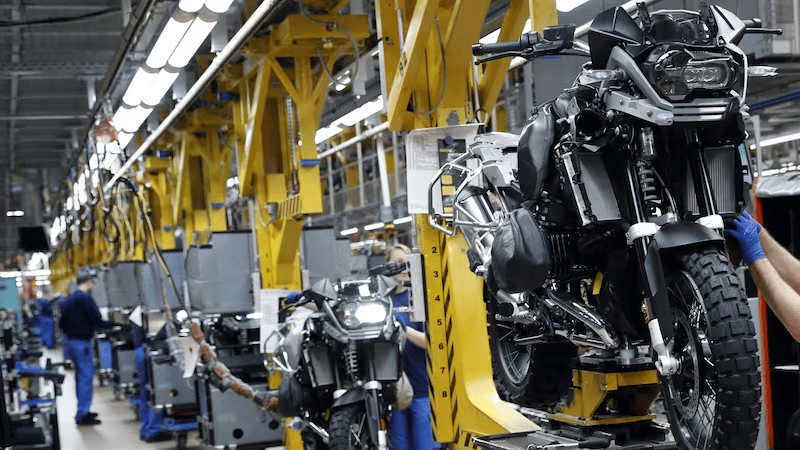
How motorcycles are transforming shopping and the mobility industry in South Africa
The South African motorcycle industry has been a victim of relentless progress in automation and productivity gains in vehicle manufacturing. The essence of automation and technological innovation has enabled the production of higher volumes of the same items in shorter timeframes. This means that small production facilities can no longer compete on a least-cost basis with large plants.

BlogCountries ManufacturingSouth Africa
The Reinvention of South Africa’s Pulp and Paper Industry
In 1972, a report titled The Limits to Growth concluded that unless societies fundamentally changed how they consumed resources and managed environmental degradation, the world would eventually face severe constraints on industrial production, economic growth, and human wellbeing. This sparked debates and initiatives to address the scarcity and limited availability of resources.
BlogCountries Agriculture & AgribusinessSouth Africa
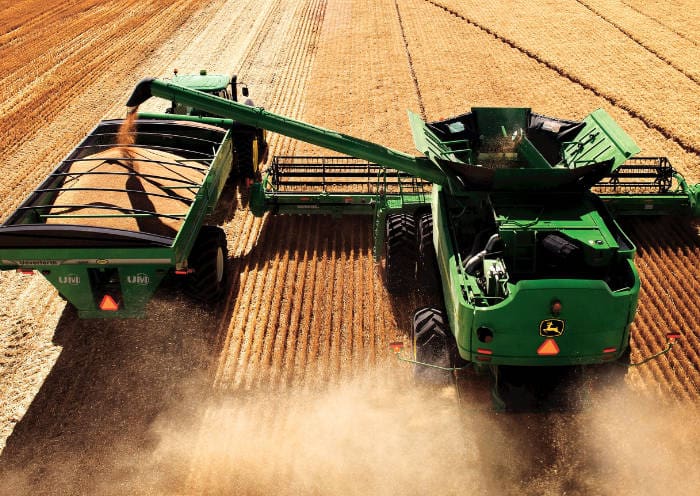
From food security to climate resilience, South African agriculture is keeping up with global competitors
The Who Owns Whom report on Trends in South African Agribusiness shares a wealth of excellent information about the agricultural sector in South Africa, with graphical illustrations that offer valuable insights into its evolution, its positioning for sustainability and the adoption of smart farming technology while securing food for its citizens.