

Zambia Snapshot
Zambia’s economy is holding steady despite the massive drop in agricultural output in 2018. But political and economic challenges weigh heavily on the country.
World Bank figures estimated Zambia’s 2018 GDP growth at 3.5% while the African Development Bank estimated economic growth at 4.0% in 2018, compared with 4.1% in 2017. It said that agricultural output fell more than 35% in 2018 due to poor rainfall, although copper production and construction contributed positively to growth.
The World Bank expects the Zambian economy to grow 2.5% in 2019 and 2.8% in 2020. Finance minister Bwalya Ng’andu, a recent replacement of Margaret Mwanakatwe, who was unexpectedly fired, reduced the country’s growth outlook for 2019 to 2.5% from an initial estimate of almost 4%.
Since president Edgar Lungu came into power in 2015, many Zambians have been unhappy about increasing corruption and fiscal and political challenges which have seen some ministers resign and a number of opposition leaders being imprisoned. Britain’s outgoing ambassador recently slammed the country’s rampant corruption and fraud, saying it had led to withholding of aid and investment.
The economy, which is heavily reliant on copper mining and agriculture, is vulnerable to variations in the copper price, and to drought, according to a Who Owns Whom report on the agri-business sector. The report said that economic growth was mostly due to growth in the services and mining sectors that offset a contraction in the agricultural sector as a result of low rainfall.
The World Bank said in its April 2019 Macro Poverty Outlook report that the GDP of Zambia’s agricultural sector decreased in real terms by an estimated 6.5% in 2018, after achieving a growth rate of 16.5% in 2017. The Who Owns Whom report indicated that maize production dropped by 33.6% in the 2017/2018 season on the back of a 15.3% reduction in the area planted, and a 21.5% drop in maize yields, caused by prolonged dry spells.
Investors have been having difficulty in Zambia. Vedanta Resources got a South African court order blocking the liquidation of its Zambian-based Konkola Copper Mines in an ongoing battle with the government, which has claimed that Vendata abused its mining licence and was shifting profits.
Zambia is 118th out of 140 countries in world competitiveness and scored poorly in measures of human development. Ng’andu pointed out that resources are largely being deployed to service debt. This will likely see it continuing to find it difficult to develop infrastructure and to attract investment.
It is widely acknowledged that a substantial portion of Zambia’s external debt, believed to have totalled $10bn at the end of 2018, is owed to China, and a number of reports express fear that Zambia is in negotiations to or is expected to hand over national assets such as electricity producer Zesco, Lusaka’s airport and mines, including Vendata’s, to China and increasingly fall under its control. The Economics Association of Zambia said recently that Zambia’s debt to China was US$3.1bn, a third of the US$9.51bn external debt the country had in the third quarter of last year. China is already a major provider of development finance and has invested in water, milling, mining, broadcasting and cement projects and companies, with one report indicating Chinese individuals and companies have invested US$5bn in the country.
Official figures of Zambia’s reliance on China are hard to come by, but a number of media have asked whether Zambia has already fallen victim to Chinese colonialism.
Contact us to access WOW's quality research on African industries and business
Contact UsRelated Articles
BlogCountries Automotive & PartsSouth Africa
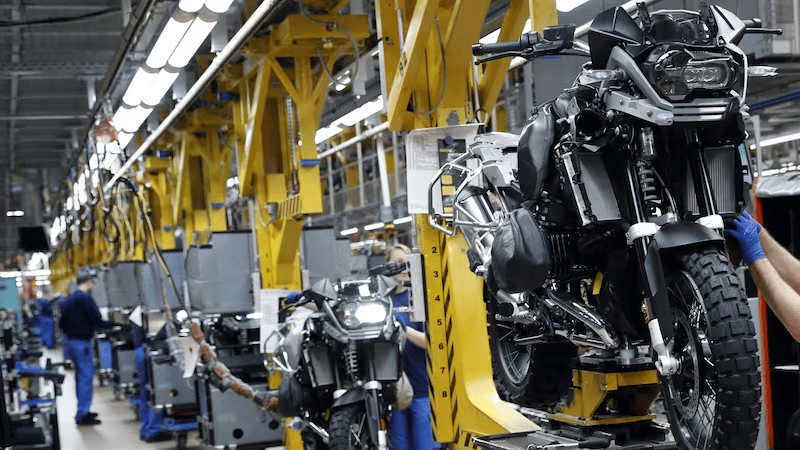
How motorcycles are transforming shopping and the mobility industry in South Africa
The South African motorcycle industry has been a victim of relentless progress in automation and productivity gains in vehicle manufacturing. The essence of automation and technological innovation has enabled the production of higher volumes of the same items in shorter timeframes. This means that small production facilities can no longer compete on a least-cost basis with large plants.

BlogCountries ManufacturingSouth Africa
The Reinvention of South Africa’s Pulp and Paper Industry
In 1972, a report titled The Limits to Growth concluded that unless societies fundamentally changed how they consumed resources and managed environmental degradation, the world would eventually face severe constraints on industrial production, economic growth, and human wellbeing. This sparked debates and initiatives to address the scarcity and limited availability of resources.
BlogCountries Agriculture & AgribusinessSouth Africa
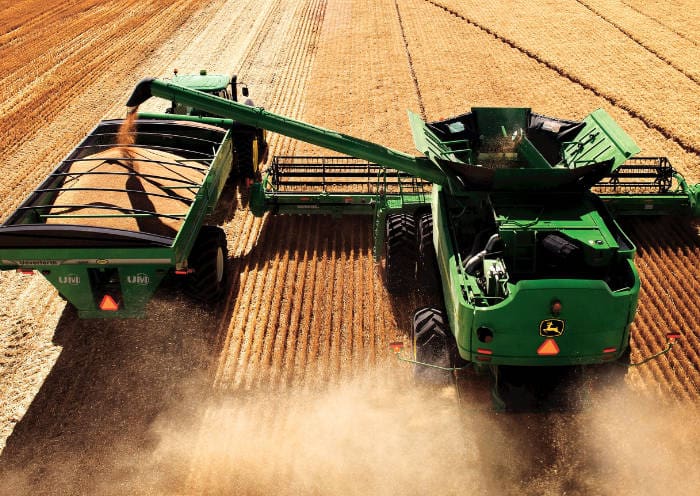
From food security to climate resilience, South African agriculture is keeping up with global competitors
The Who Owns Whom report on Trends in South African Agribusiness shares a wealth of excellent information about the agricultural sector in South Africa, with graphical illustrations that offer valuable insights into its evolution, its positioning for sustainability and the adoption of smart farming technology while securing food for its citizens.