
Plastic Continents
Glass is natural and sustainable, two characteristics that are listed as industry strengths in our recently published report on the manufacturing of glass. An opportunity for the sector is the rising consumer anti-plastic sentiment.
In the last 65 years the world has produced 8.5 billion tons of plastic, half of that in the last 13 years, and only 9% of the waste has been recycled. An ocean gyre is a system of circular ocean currents formed by the Earth’s wind patterns and the forces created by the rotation of the planet which collects non-biodegradable plastic. There are five major ocean-wide gyres: in the North Atlantic, South Atlantic, North Pacific, South Pacific and the Indian Ocean. The swirling pile of trash in the North Pacific Ocean has grown to an area covering 1.6 million square kilometres or three times the size of France.
Oceanic churning reduces much of the plastic to a chemical sludge which is very dangerous to marine life as tiny plankton organisms, which are low on the food chain, consume the particles. Loggerhead sea turtles often mistake plastic bags for jellies, their favourite food, and albatrosses mistake plastic resin pellets for fish eggs and feed them to chicks which then die of starvation or ruptured organs.
The world is currently producing 8 million tons of plastic every year which could double by 2025 and the only way to reverse that trend is to stop using it. In my view everything tastes better when it comes out of a glass bottle so let’s boycott plastic bottles. While at first drinking from a paper straw may feel a bit strange, paper does no harm. A new machine designed by a young Dutch engineer that can be used to clean up the ocean will be deployed this year and no doubt more innovation will come. For now the trick is to stop adding to the pile.
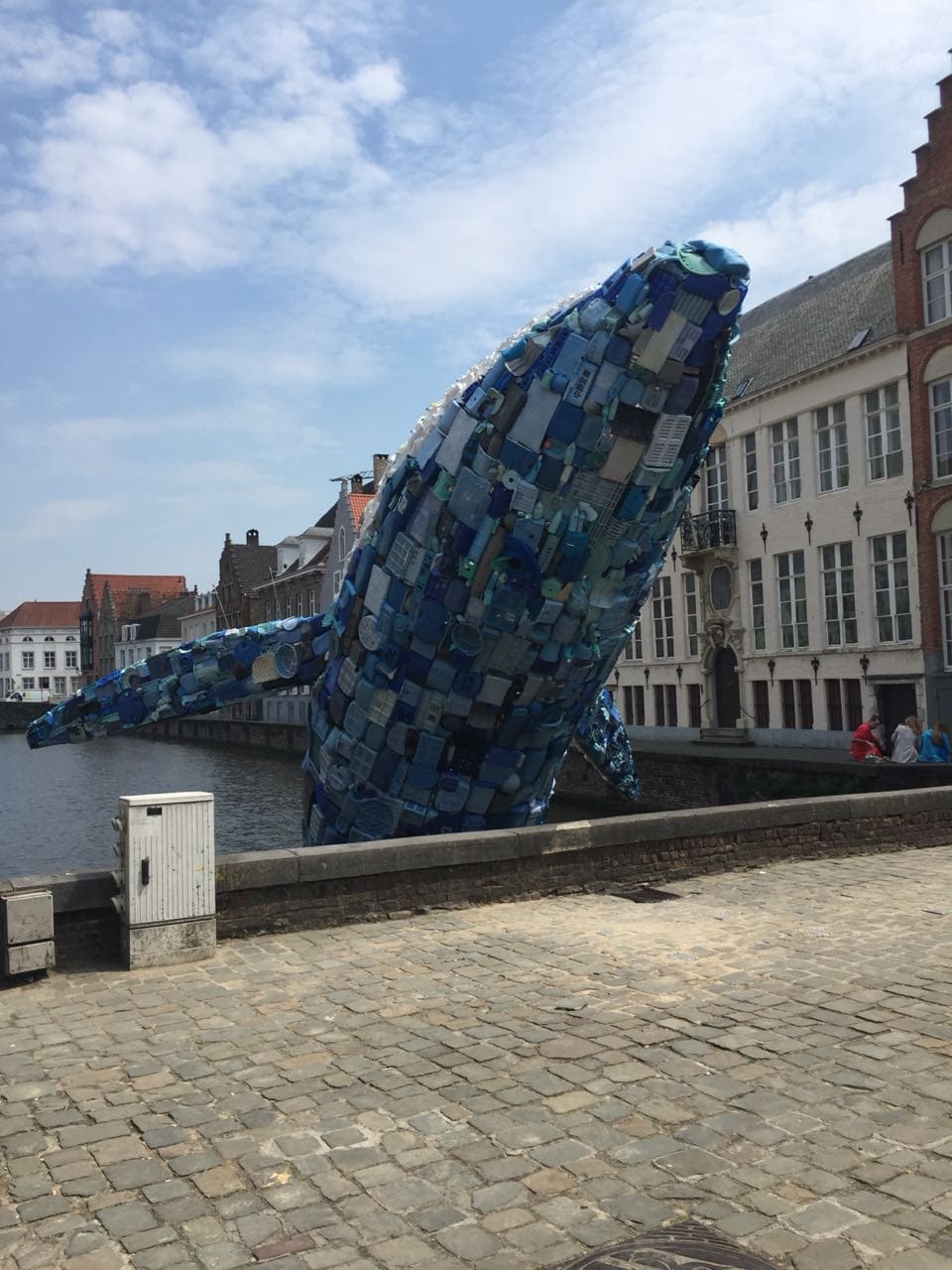
Protest art in Belgium - whale made from plastic containers
Contact us to access WOW's quality research on African industries and business
Contact UsRelated Articles

Blog
Can South Africa turn the second-hand goods boom into a circular opportunity?
Who would have thought that second-hand clothing could be valued at roughly $198.64 billion globally? Yahoo Finance says the apparel sector is growing much faster than the traditional retail market...

Blog
New Rules of Sustainable Finance in South Africa signal a shift from green finance to trusted data
South Africa’s sustainable finance landscape is moving beyond green investment towards a broader question of trust. Key questions are: Can capital, data and technology be deployed responsibly and transparently? As...

Blog Financial Institutions
Uganda’s financial services sector, powering growth and unlocking new opportunities
Uganda provides one of Africa’s compelling case studies of how the financial services sector is transforming. Mobile money platforms are driving financial inclusion and rapidly reshaping the mainstream banking sector....